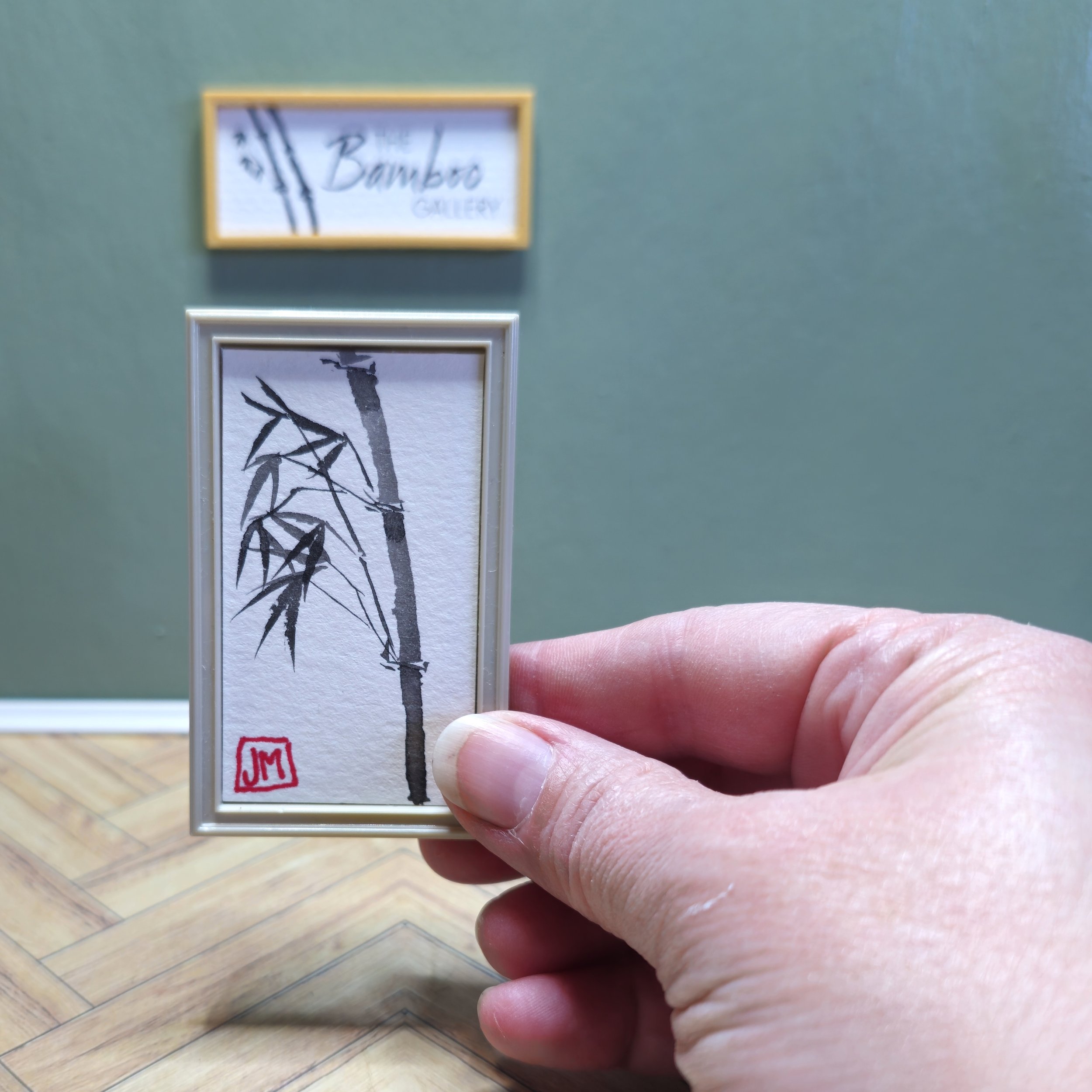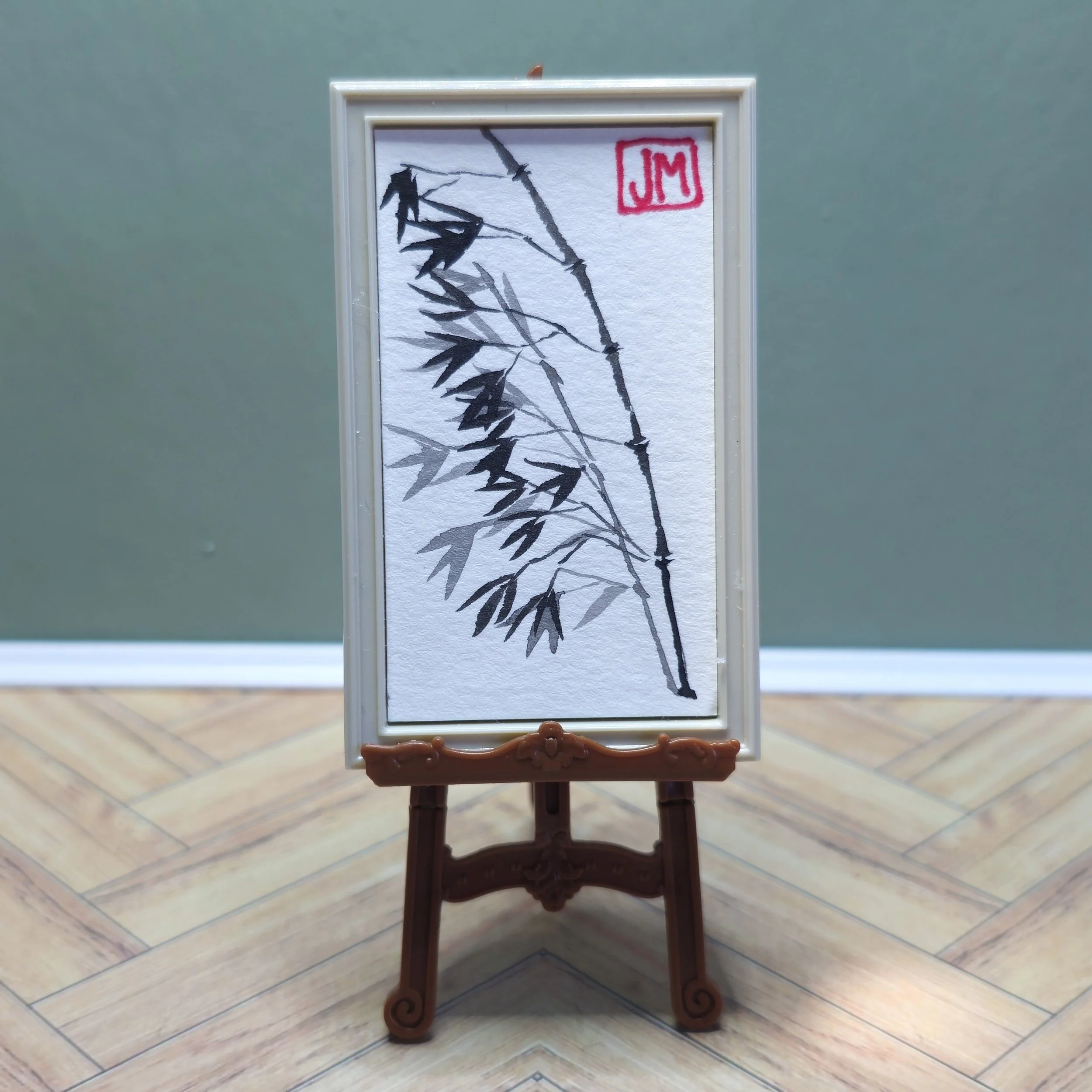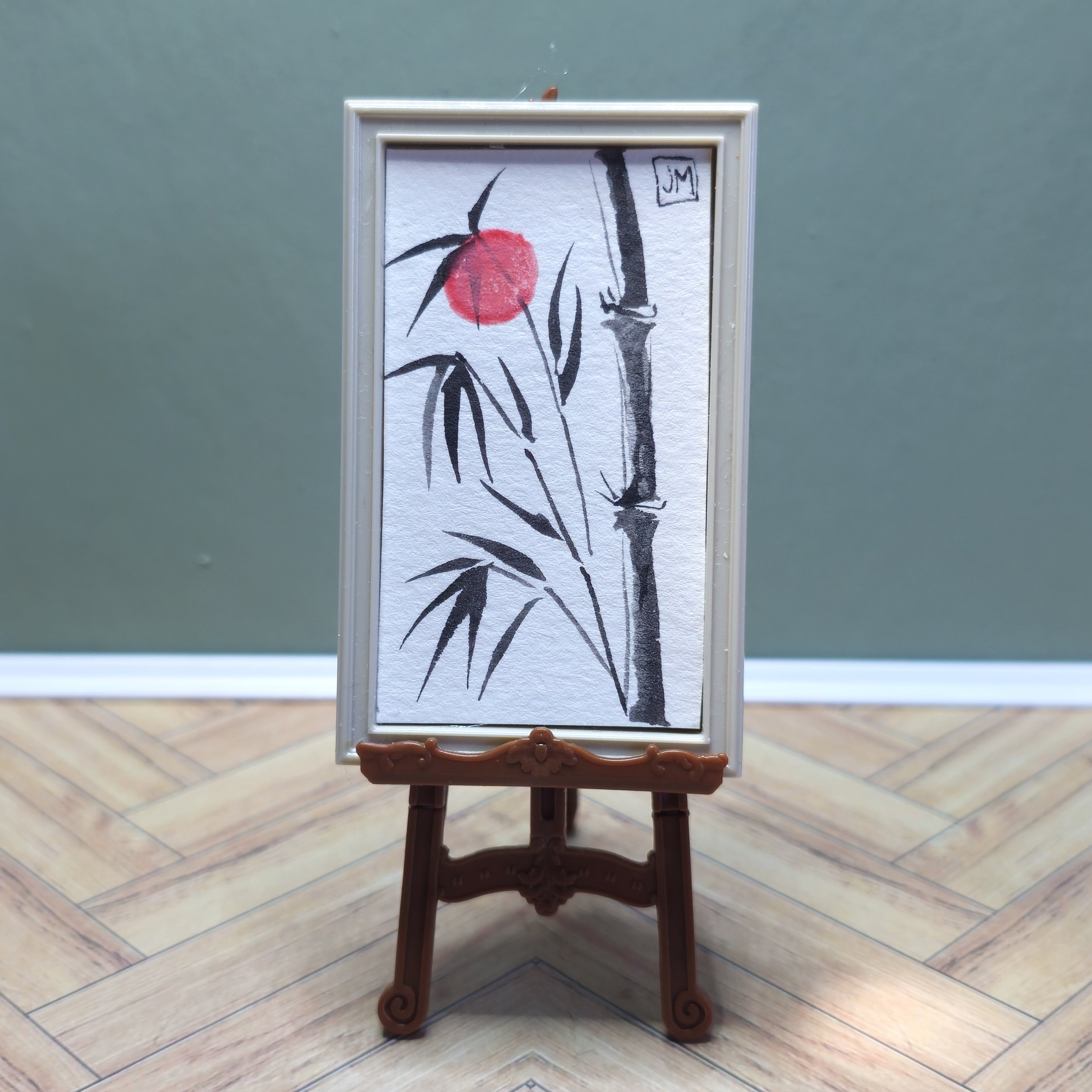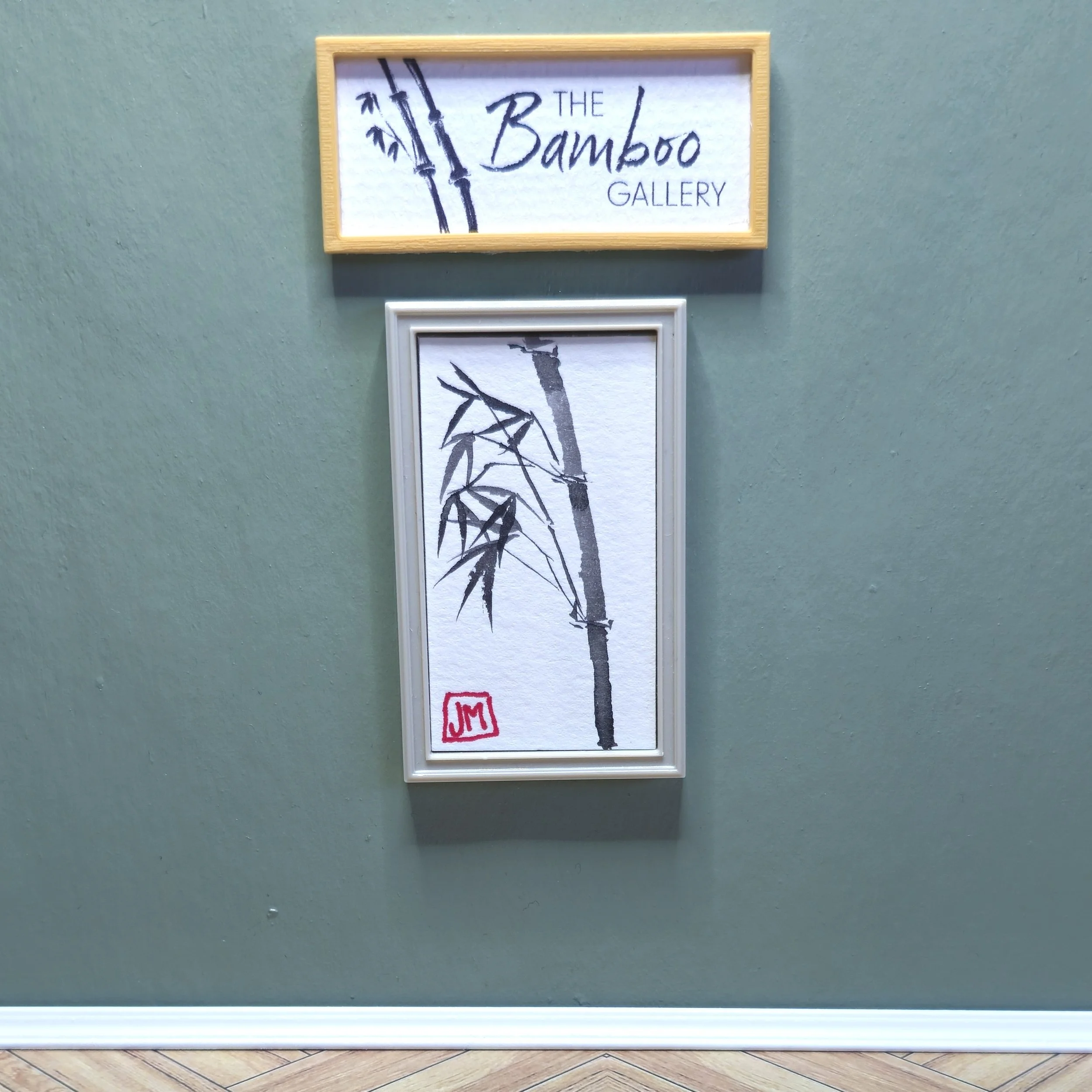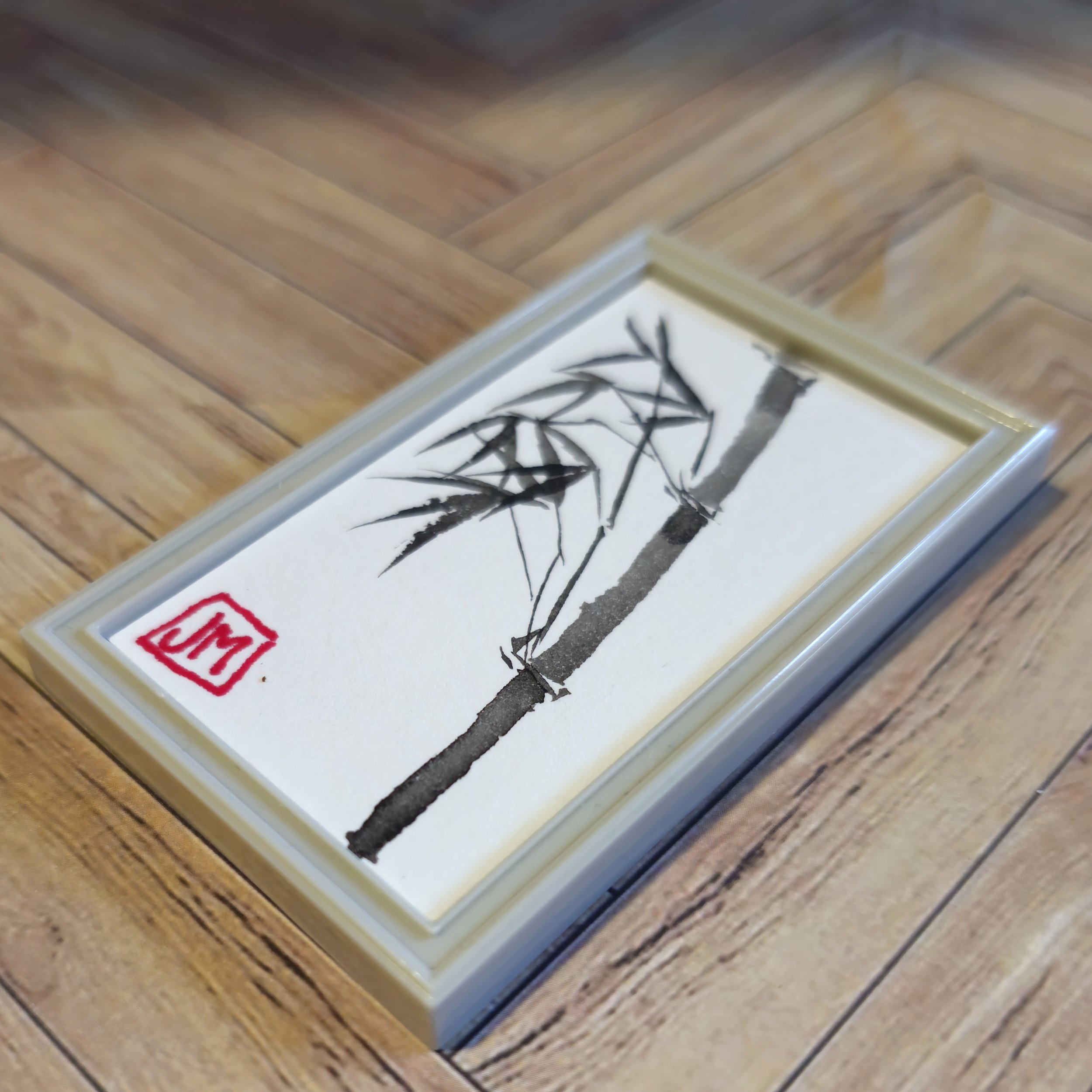
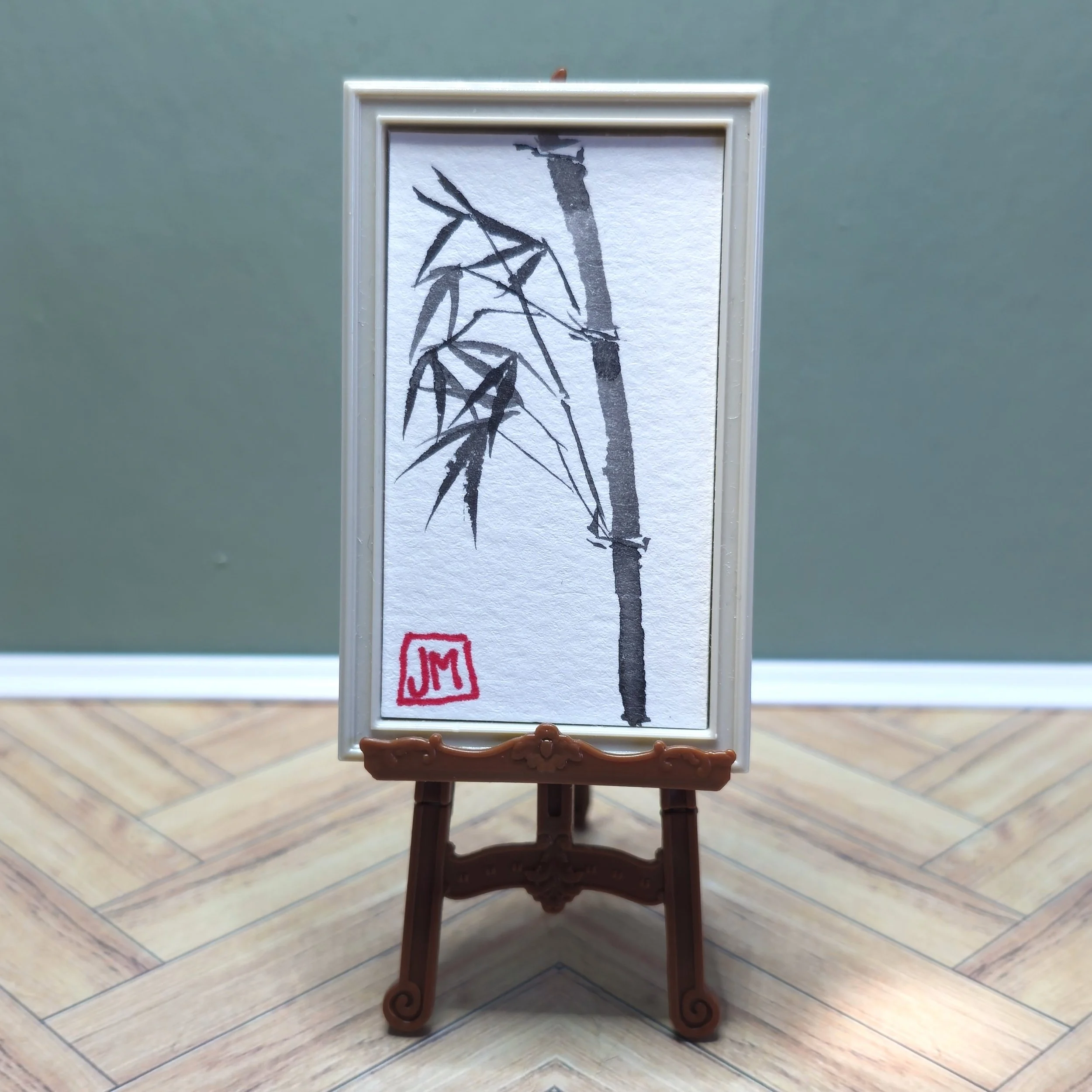
Bamboo in a Long Frame

$12.00

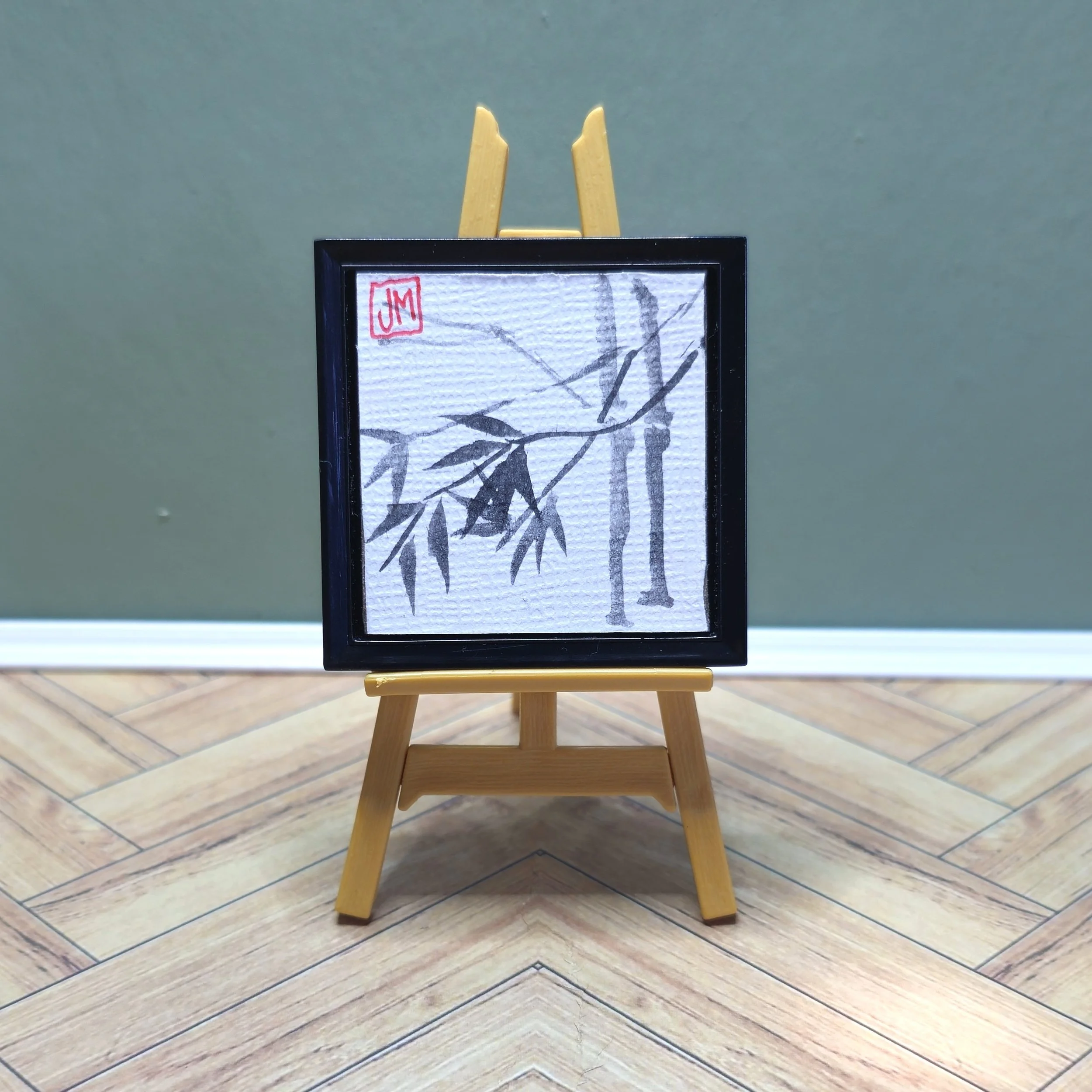
Painting bamboo is about rhythm, restraint, and respect. Each stalk needs confident, simple strokes to show its straight, tapering form; leaves are light, arced flicks of the brush. The palette is simple, but blending suggest wetness, age, and sheen takes care. Negative space matters: the gaps around stalks give them weight and imply a rustling grove. Bamboo painting balance’s structure and spontaneity, hinting at wind, strength, and quiet persistence in a few deliberate marks.

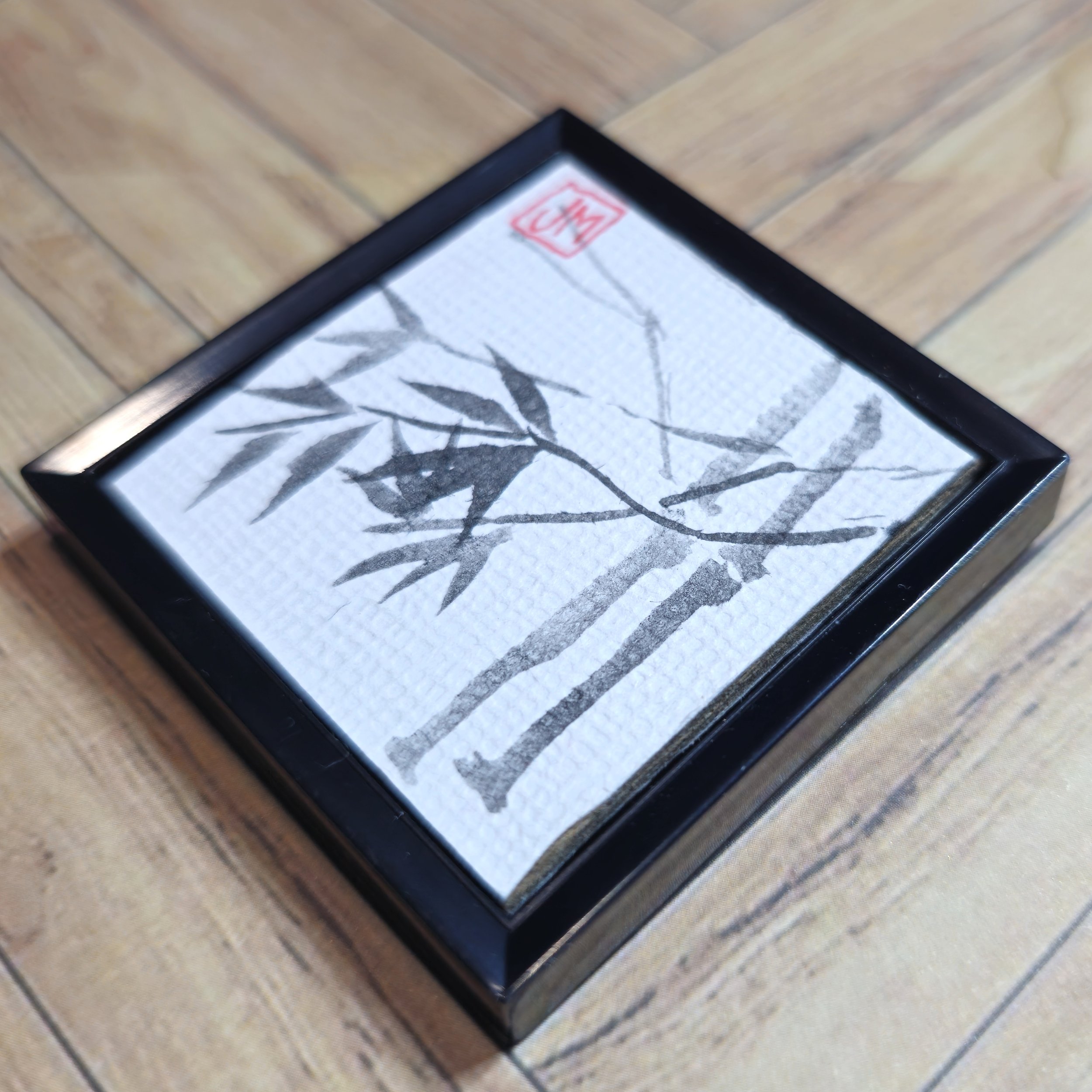
Painted using the Sumi technique on cold-pressed watercolor paper.

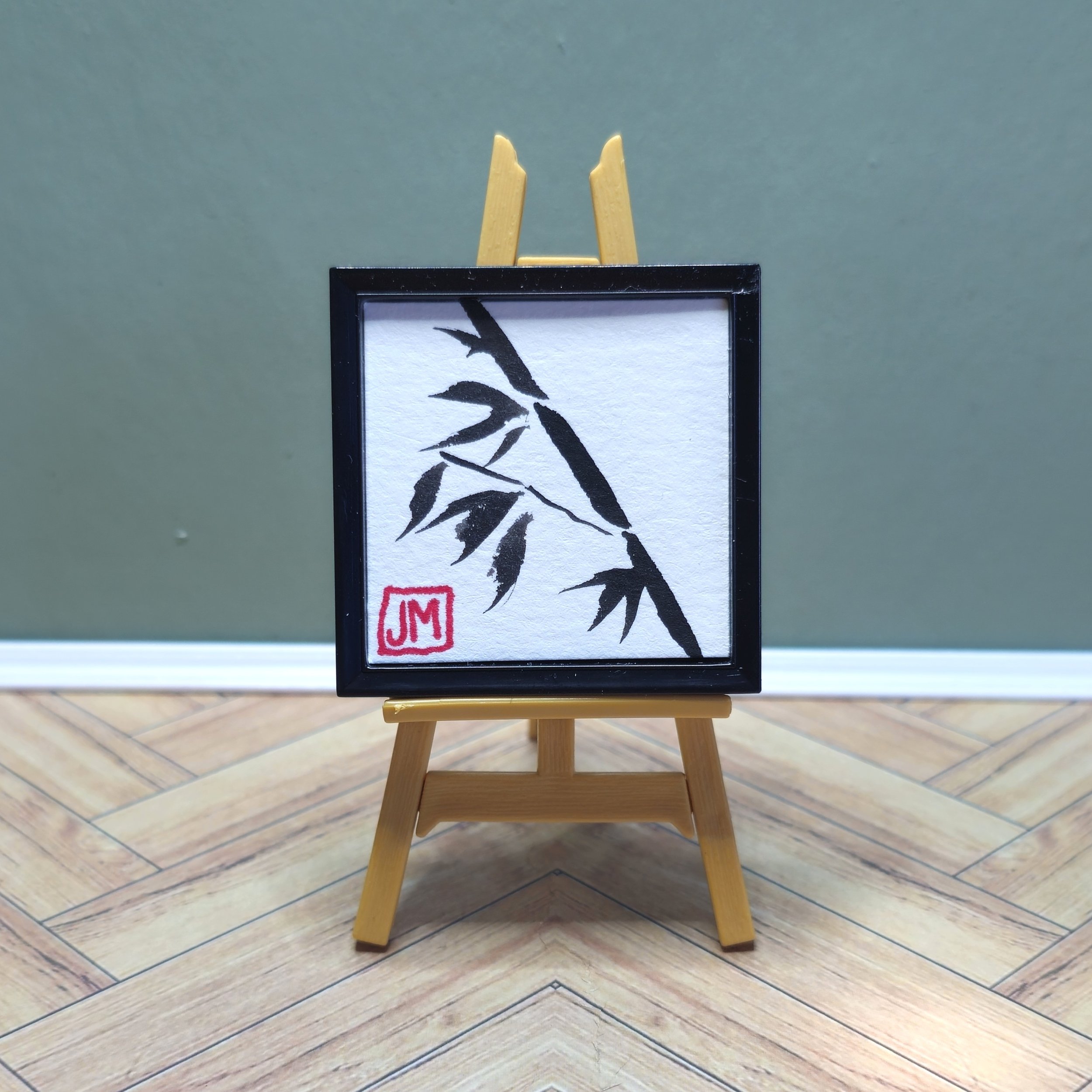
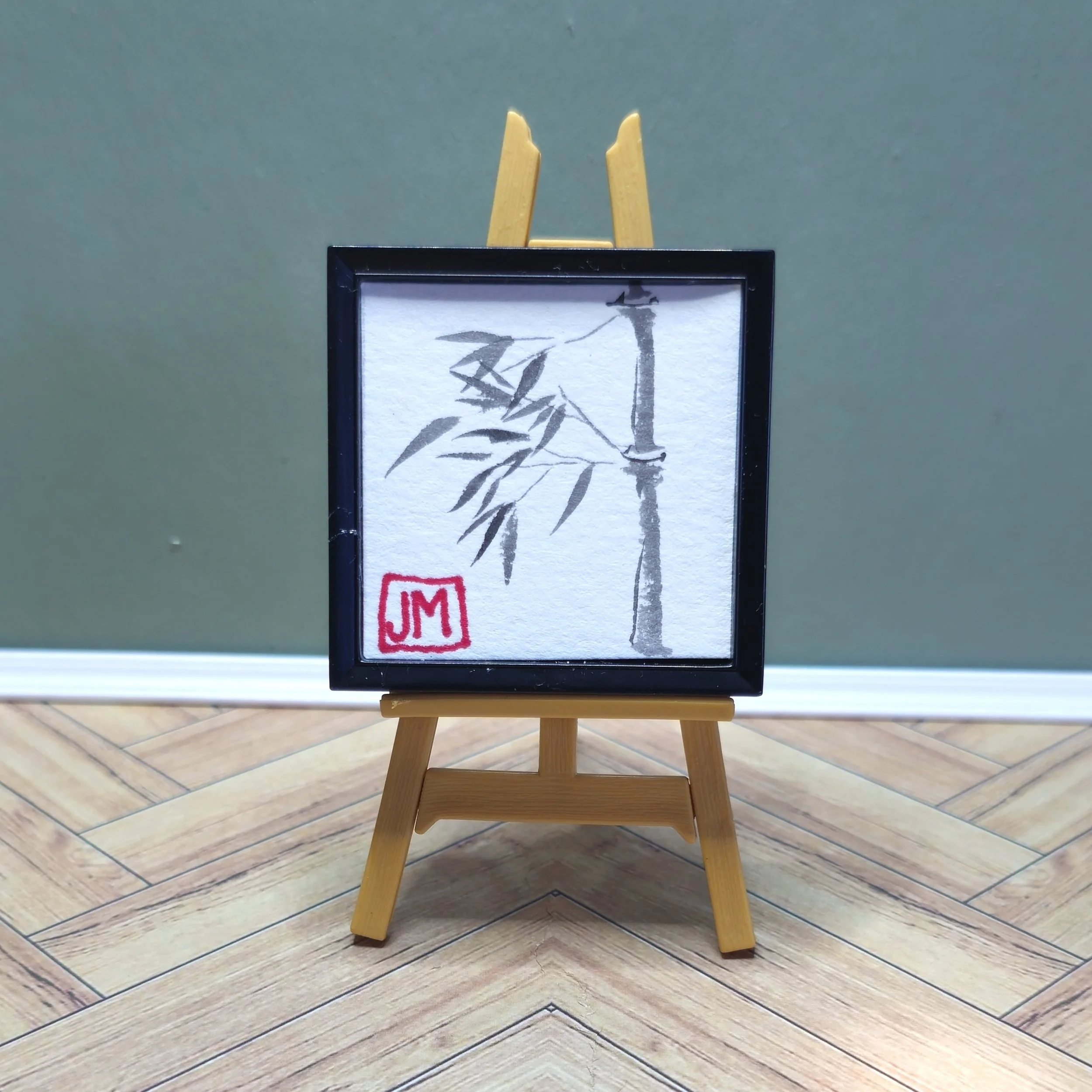
Each painting is done by my hand and is unique. The one you receive will differ from the photo but be unique for you.

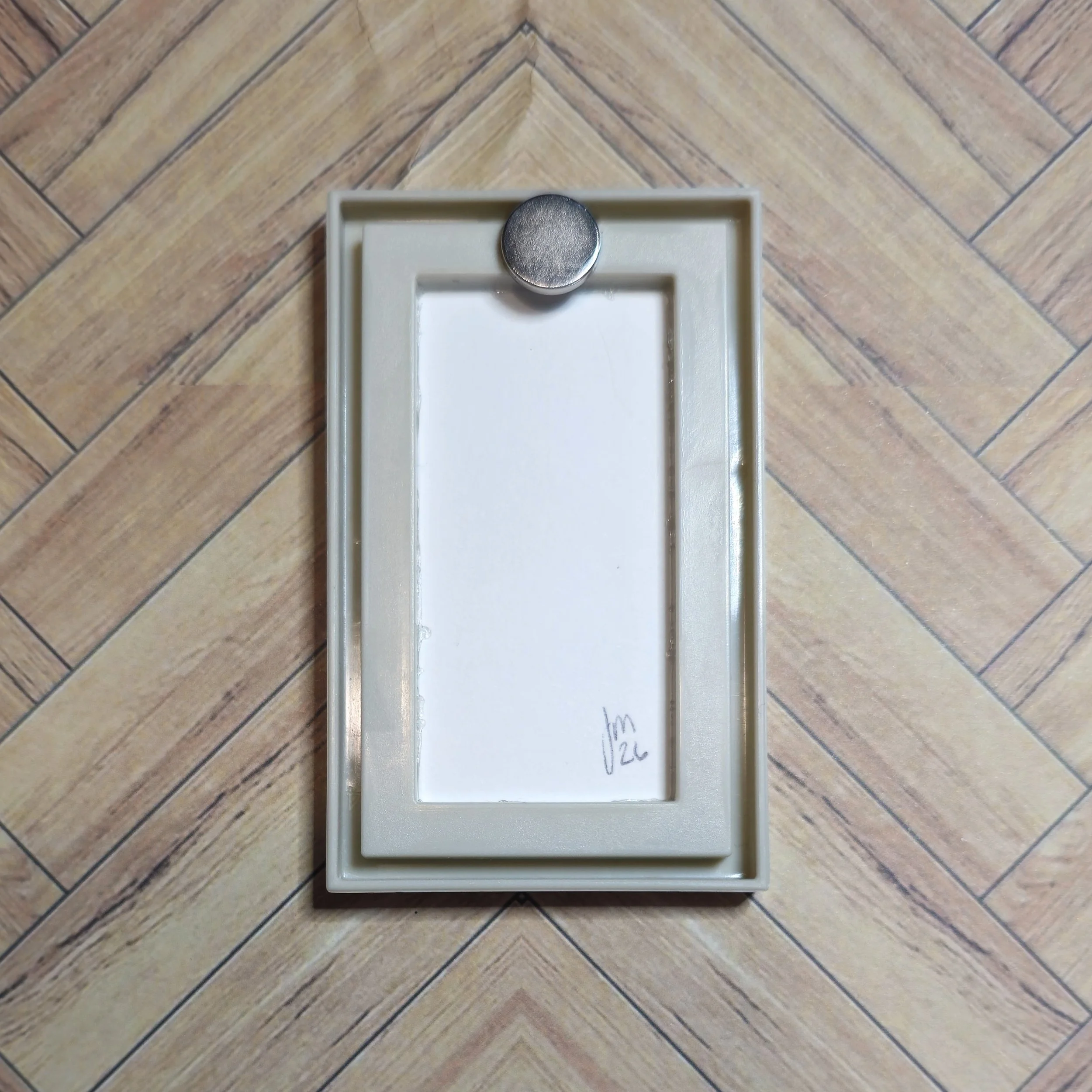
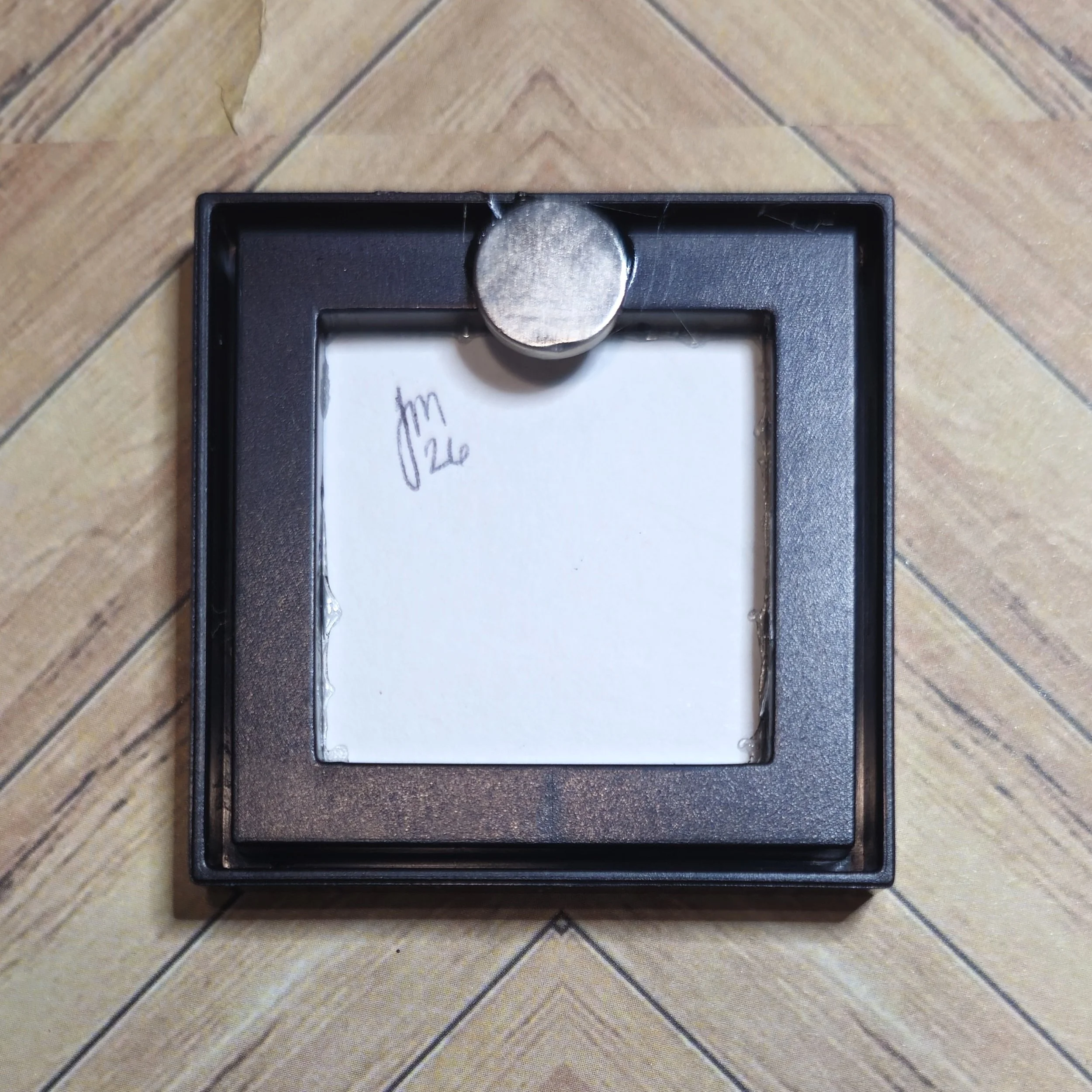
The frame is plastic and has a single magnet glued onto the back.

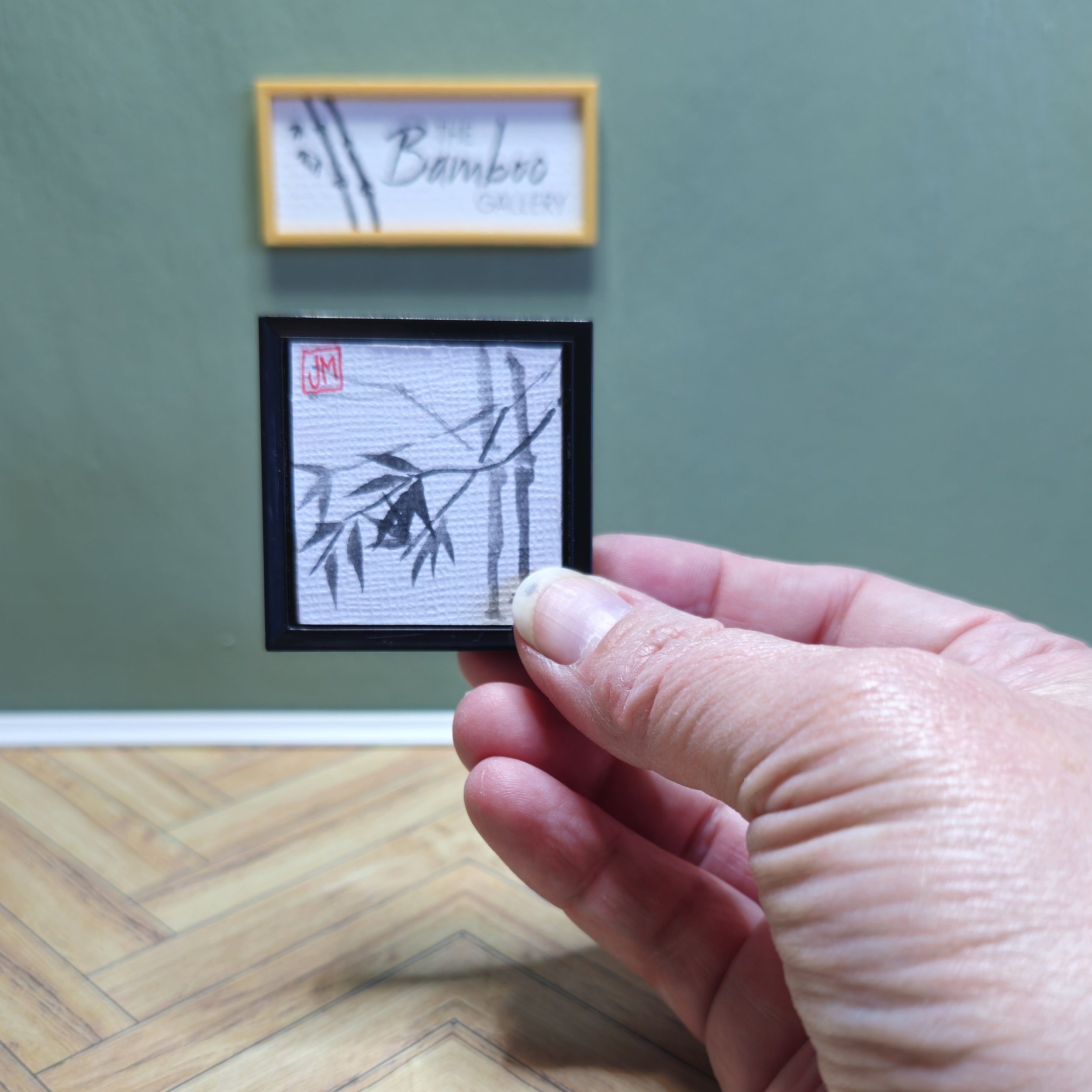
Approximately 2.75”x 1.75”x .25”

Painting bamboo is about rhythm, restraint, and respect. Each stalk needs confident, simple strokes to show its straight, tapering form; leaves are light, arced flicks of the brush. The palette is simple, but blending suggest wetness, age, and sheen takes care. Negative space matters: the gaps around stalks give them weight and imply a rustling grove. Bamboo painting balance’s structure and spontaneity, hinting at wind, strength, and quiet persistence in a few deliberate marks.

Painted using the Sumi technique on cold-pressed watercolor paper.

Each painting is done by my hand and is unique. The one you receive will differ from the photo but be unique for you.

The frame is plastic and has a single magnet glued onto the back.

Approximately 2.75”x 1.75”x .25”

When I paint in the sumi-e style, I start by placing essential oils into my bamboo diffuser and play a relaxing Zen soundtrack.

I then spend time grinding the inkstick onto an ink slate, while steadying my breathing and reaching my Chi.

When the ink has reached the correct deepness, I begin painting with a bamboo brush, sweeping my lines across the small canvas, mixing my ink with water to create gradients with the ink.
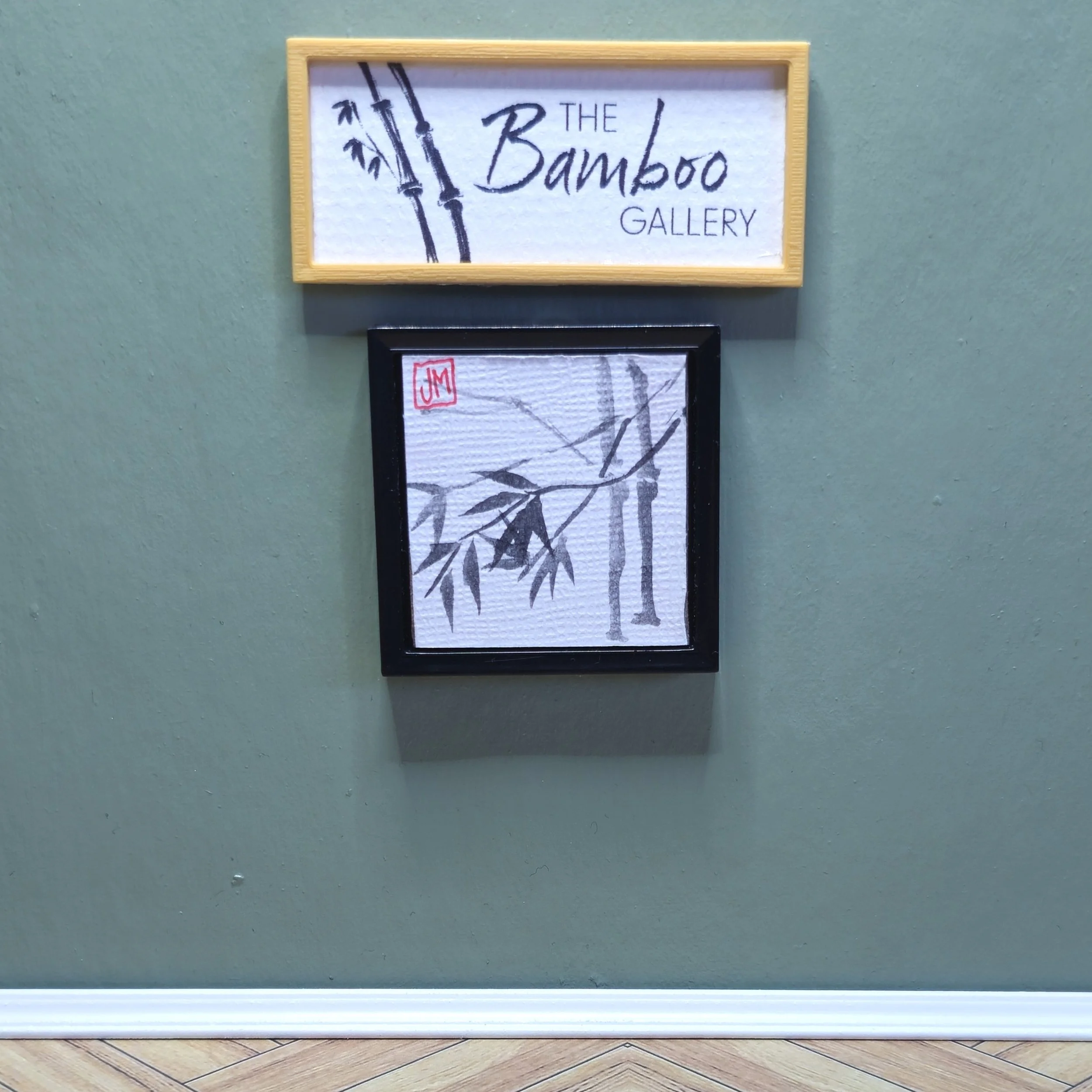
About Sumi-e: Sumi painting is a minimalist East Asian ink art form that emphasizes simplicity, expressive brushwork, and the spirit of the subject. Using sumi ink—made from soot and animal glue—artists work with varying ink densities, brush pressures, and empty space to convey mood, movement, and essence rather than detailed likeness. Strokes are deliberate and often executed in a single, confident motion; negative space is as important as the mark itself. Traditionally practiced with brushes, rice paper, and often accompanied by subtle seals or calligraphy, sumi balances technique with spontaneity, inviting both painter and viewer to find quiet presence in restraint. It values the beauty of imperfection, the poetry of suggestion, and the harmony between ink, paper, and breath.